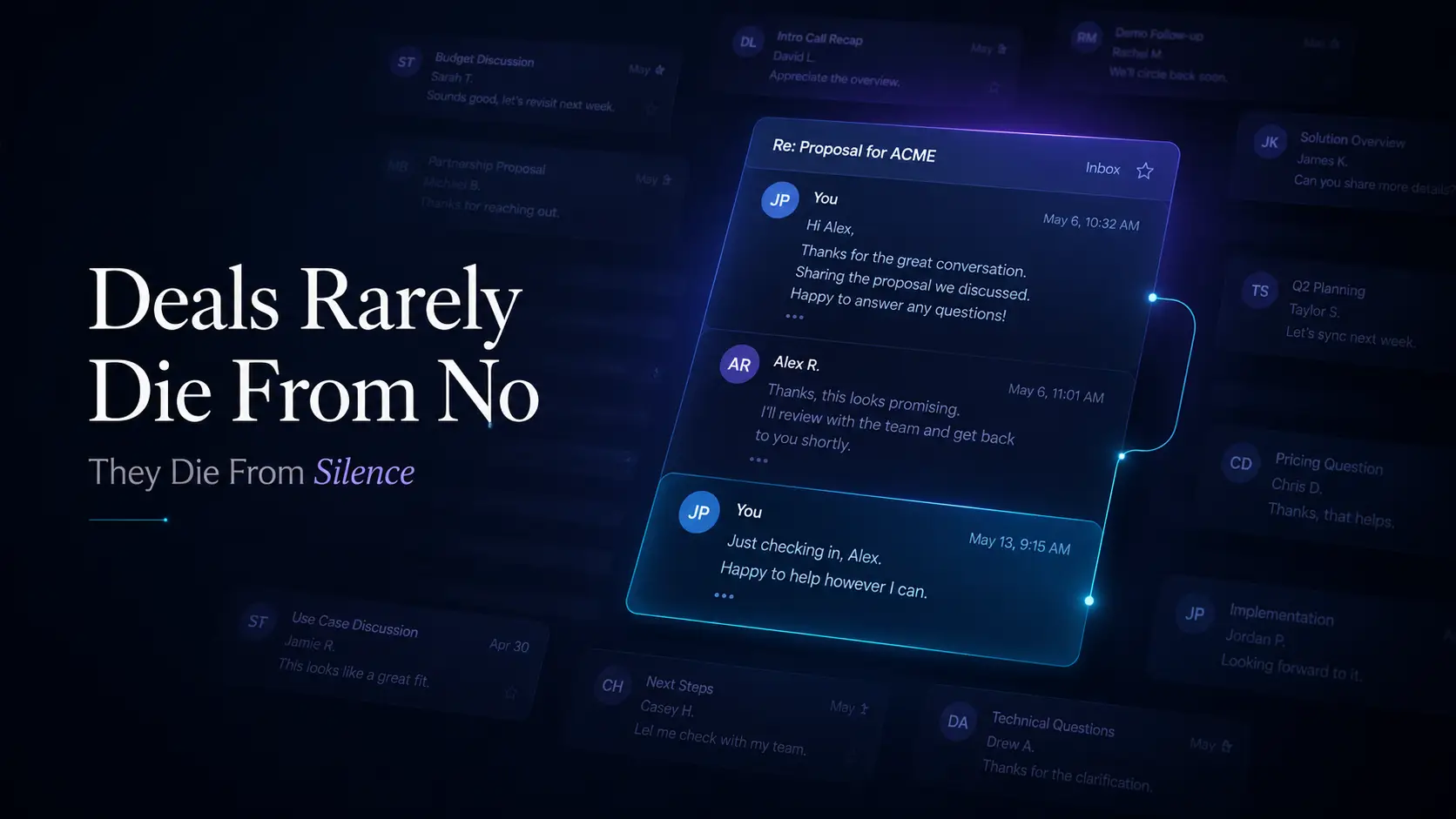
How long to wait before following up on an email is one of the most common questions in sales and professional outreach, and the answer is almost always "it depends." But that is not a dodge. The right timing genuinely changes by situation, and getting it wrong in either direction costs you replies.
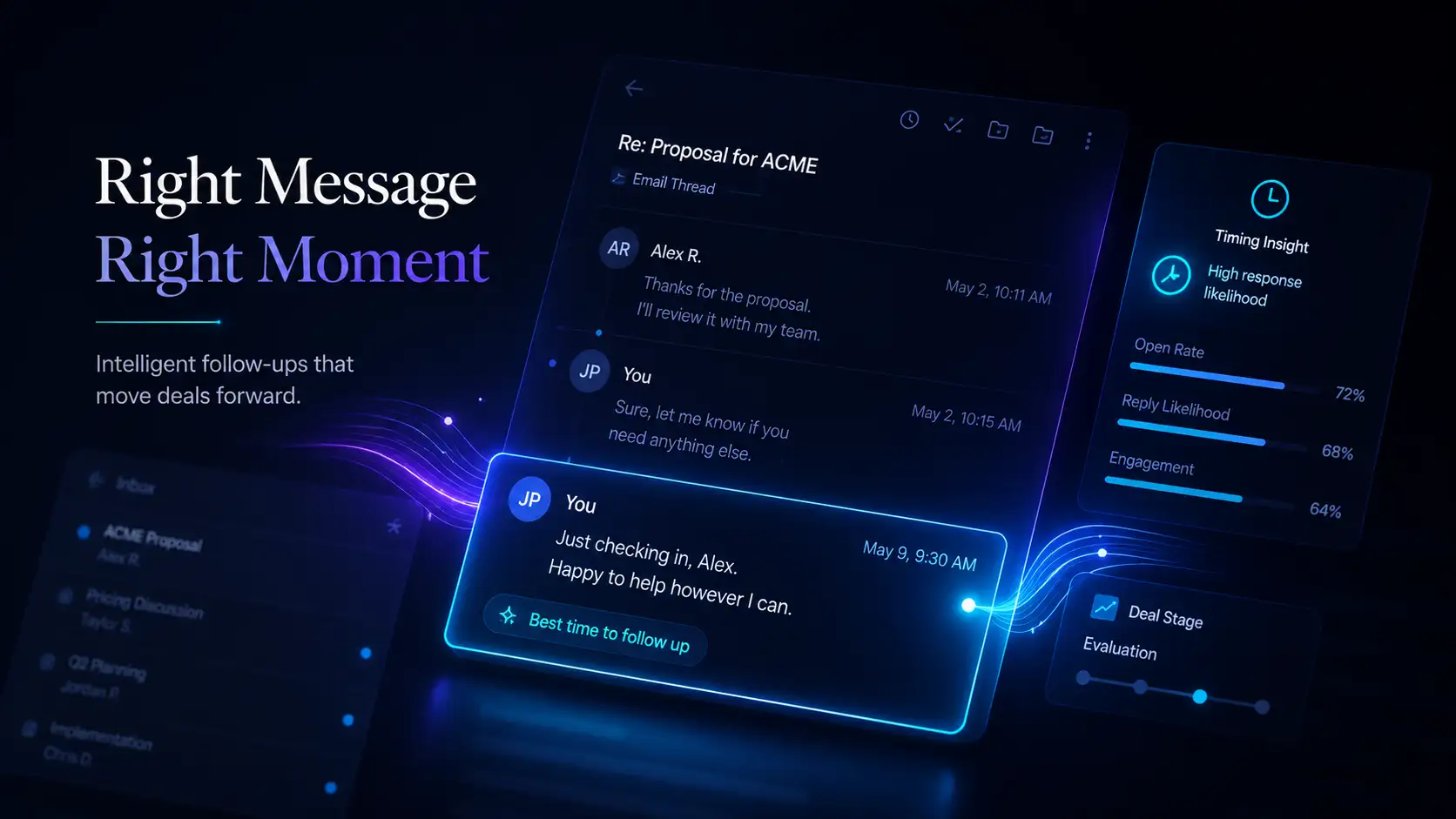
The Short Answer
For cold outreach, wait three to five business days. For warm follow-ups after a meeting, the same day or next morning is usually right. For proposals and quotes, two to three business days gives the reader time to review without pressure. And for threads that have gone completely quiet, five to seven days between touches signals patience rather than desperation.
Those defaults cover most situations. But there is a layer underneath them worth understanding, because the right timing is about more than a number. It is about how your message lands in the reader's day and what signal your timing sends about you.
Why Timing Matters as Much as What You Say
A well-written email sent at the wrong moment can still end up buried and ignored. Inboxes fill fast, and a message that arrives at the bottom of a Friday pile gets far less attention than the same message arriving on a Tuesday morning when the reader is fresh. So timing shapes the context your words land in, not just when they arrive.
Timing also communicates something about the sender. A follow-up sent the next morning after a first email reads as pushy. But one sent four or five days later reads as professional and patient. So the wait itself is part of the message. It tells the reader how you operate, and that impression sticks even before they read a single line.
The good news is that you do not need to be precise to the hour. Getting the rough range right is what matters. So a two-day wait and a four-day wait both land in roughly the same window of reasonableness. But a same-day follow-up and a three-week gap both send signals you almost never want to send.
How Long to Wait Before Following Up, by Situation
Different moments call for different gaps. So here is how to think about each one.
After a First Outreach Email
Cold outreach needs the most patience. The reader does not know you yet, so following up too quickly can feel like pressure before trust has been built. Three to five business days is the standard window, and it gives the inbox time to clear without letting the thread go fully cold.
Warm introductions can move a little faster. When someone has made a connection for you or the reader has shown existing interest, two to three days is usually fine. The relationship context shortens the wait because it shortens the trust gap.
After a Meeting or Call
This is the one case where faster is almost always better. Send a follow-up the same day the meeting ends, or first thing the next morning if the call ran late. The conversation is still fresh, the next steps are clear in both minds, and your message arriving quickly shows you are organized and ready to move.
Waiting two or three days after a meeting lets the energy fade. So other priorities fill the gap, and what felt like a warm and productive conversation starts to feel like just another calendar event. So getting the recap and the next step into the inbox quickly is one of the most reliable ways to keep a deal moving.
After a Proposal
A proposal follow-up needs a little more patience than most. The reader is usually sharing it internally, running it by finance, or comparing it against other options. So landing in their inbox two hours after sending a quote can feel like you are watching them read it, which nobody likes.
Two to three business days is the right window. It shows confidence in the proposal and respect for their process. And if they asked for a specific timeframe to review it, follow up one day before that window closes, not one day after it opens.
After a Long Silence
When a thread has gone quiet for a week or more, the standard timing rules reset. Each touch in a re-engagement sequence needs more space than the one before it. So five to seven days between messages works well here, and it tells the reader you are persistent without being panicked.
The wording matters more in this situation too. A message that acknowledges the silence and offers an easy out tends to get a reply more often than one that pretends the silence never happened. So "bumping this in case it got buried" lands better than "following up on my last three emails."
| Situation | Recommended Wait Time | Why |
|---|---|---|
| First outreach, cold email | 3 to 5 business days | Gives inbox time to clear |
| First outreach, warm intro | 2 to 3 business days | Relationship warrants a faster nudge |
| After a meeting or call | Same day or next morning | Momentum is highest immediately after |
| After a proposal | 2 to 3 business days | Time to review without pressure |
| After a long silence | 5 to 7 days between touches | Space reads as confidence, not desperation |
The Wrong Way to Think About Timing
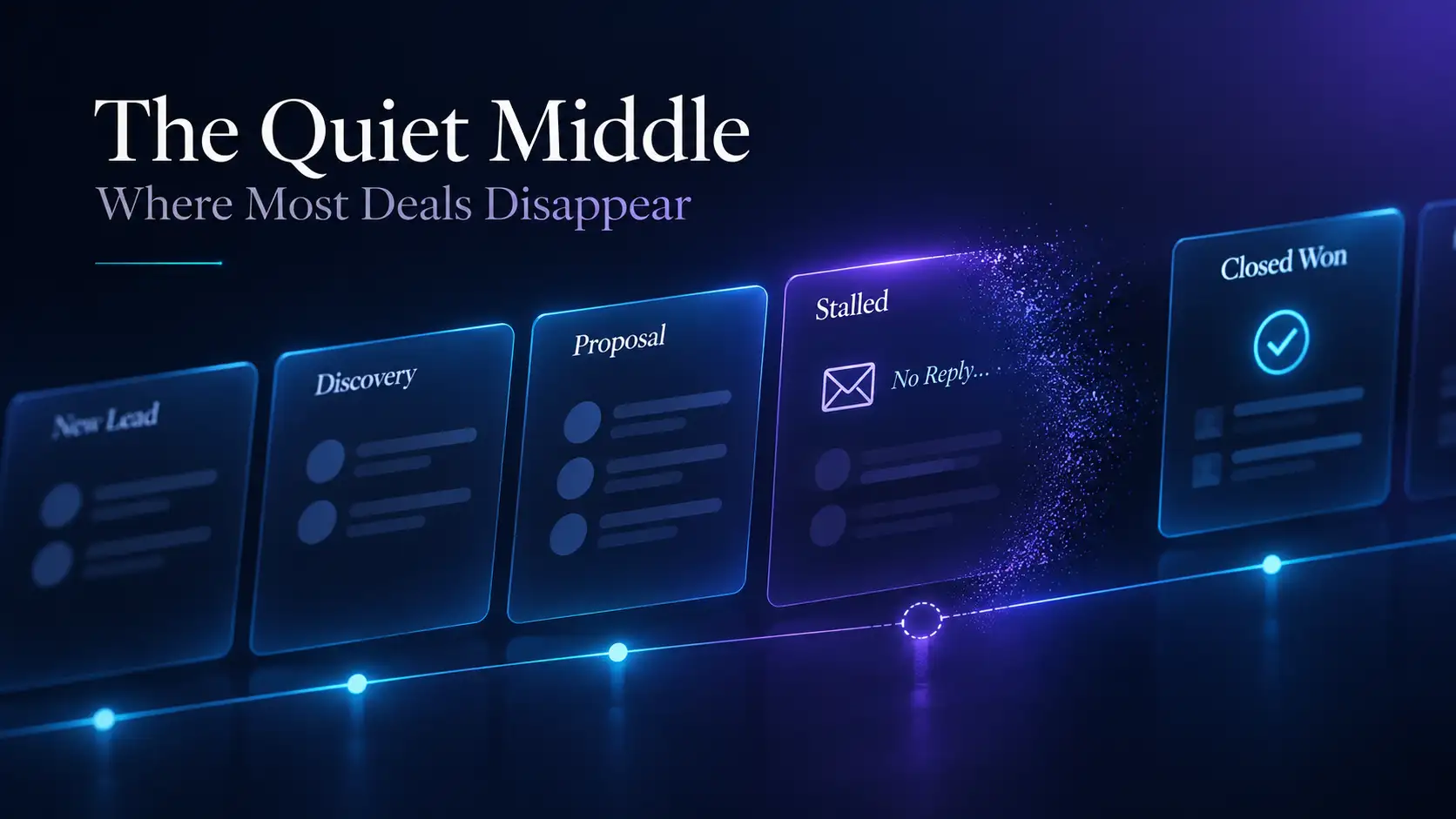
The most common mistake with follow-up timing is treating it like a fixed schedule. Some sellers set a reminder for every three days regardless of context, and some tools send automatic follow-ups on a preset cadence that never changes. But the same wait time does not fit every situation, and a rigid schedule often sends the wrong signal at the wrong moment.
The better way to think about it is to read the thread before you send anything. What did the buyer say last? Did they mention a deadline or a meeting coming up? Did they ask a question you never answered? So the thread itself usually tells you when to follow up and what to say, if you take a minute to read it before writing the next message.
And if you have a large number of open threads to manage, that reading becomes the bottleneck. So a tool like Continuas AI handles the thread reading automatically, surfaces the right timing for each conversation, and drafts the follow-up in your voice. So you are not stuck deciding how long to wait on fifty threads by hand. The timing comes from the conversation itself, which is exactly where it should come from.
Frequently Asked Questions
Conclusion
How long to wait before following up on an email is not a single number. It is a judgment call that changes by situation, by relationship, and by what the thread itself is telling you. So the defaults in the table above give you a reliable starting point, and the thread gives you the rest.
Get the timing roughly right, and your follow-ups land with a better chance of being read and answered. Get it very wrong in either direction, and even a well-written message can miss. So treat the wait as part of the message itself, and your reply rate will reflect it.