Getting a reply to your email is not about clever tricks. It is about removing every reason the reader has to ignore you. So this guide covers five things that actually move the needle, plus the exact words to swap out for the ones that quietly sink your response rate.
Why Most Emails Go Unanswered
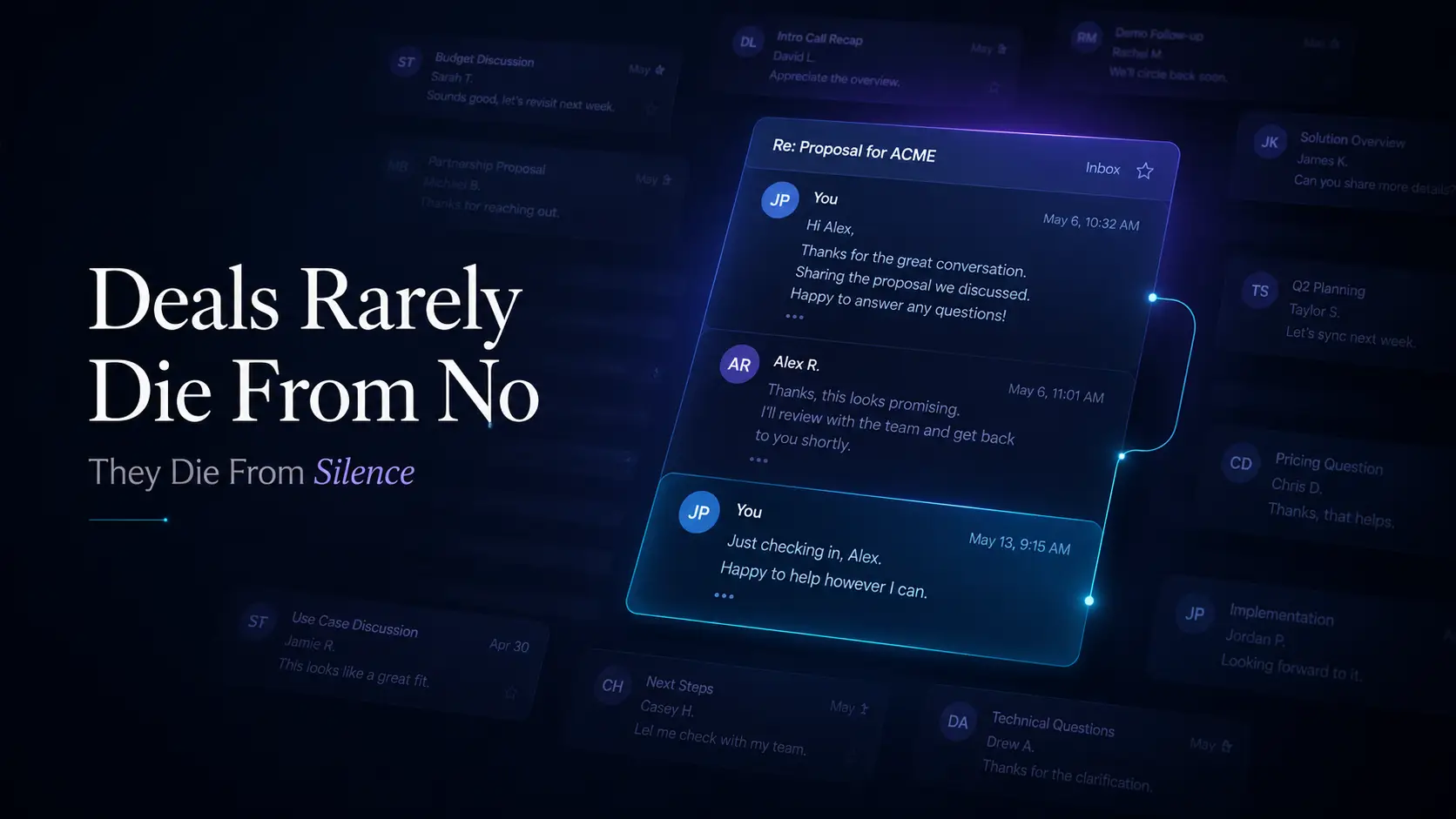
Most emails land in the inbox and never get a reply, not because the reader decided no, but because replying felt like work. The message was long. The ask was buried. Or there was no clear next step. So the reader skimmed it, thought "I will get to that," and never did.
The inbox is ruthless. Dozens of new messages arrive every day, and any note that does not immediately earn attention drops to the bottom of the pile. So your email is competing with a full schedule, short attention, and a dozen easier things to do right now.
Timing plays a role too. A great message sent at the wrong hour simply gets buried. So even if the words are perfect, landing in the inbox at 6pm on a Friday is often the same as not landing at all. And that gap between send and open is where a lot of good emails die.
The good news is that most of these problems have simple fixes. So knowing how to get a reply to your email is mostly about removing friction, not adding cleverness. And the five things below address the biggest sources of that friction directly.
The Five Things That Get a Reply
Start with a clear subject line that names what the email is about. Not "Following up" and not "Quick question." Something specific, like "Case study you asked about" or "Recap from Tuesday." So the reader knows exactly what is inside before they open it, and they do not have to guess.
Open with the reader in mind, not yourself. The first line should reference something real from your last exchange, or speak directly to a problem they mentioned. So "You asked about pricing by Friday" beats "I wanted to follow up on my earlier email" every single time. One is about them. The other is about you.
Ask for one thing. Only one. Not a reply and a call and a document and a decision. Pick the single most important next step and ask for only that. A reader who sees three requests often takes zero action because they cannot easily do all three at once. So keep the ask small, and the reply comes faster.
Make saying yes easy. Offer two specific times instead of an open calendar. Link directly to what you mentioned instead of asking them to search for it. Write the reply you want them to send and put it at the bottom, so they can just paste it back. So the easier you make the action, the more often it happens.
Send at the right time. Mid-morning on a Tuesday, Wednesday, or Thursday outperforms most other windows. So think about when your reader actually opens email, and time your send to land near the top of their inbox in that window. A well-timed message often gets a reply simply because it arrived at the right moment.
What Not to Say
Certain phrases kill replies before the reader even finishes the first line. So knowing what to cut is just as important as knowing what to add. The worst offenders are phrases that waste the reader's time, that guilt them, or that feel like a form letter rather than a personal message.

The table below shows the most common problem phrases and the better alternatives that work in their place. These swaps take about ten seconds each, and they make a real difference to how the message lands.
| Wrong Phrasing | Better Alternative |
|---|---|
| "Just checking in" | "Quick question about your timeline" |
| "Per my last email" | "Circling back on the case study I sent" |
| "As per my previous message" | "You mentioned X, so I wanted to follow up" |
| "I haven't heard from you" | "Bumping this in case it got buried" |
| "Let me know your thoughts" | "Does Thursday still work?" |
Every phrase on the left creates distance. Either it sounds passive-aggressive, or it puts all the work on the reader, or it reads like a template. So the phrases on the right do the opposite. They are specific, warm, and easy to answer in a single line. That is the whole difference.
Putting It Together
A message that earns a reply is short, specific, and simple to act on. So it names one thing in the subject, opens with something about the reader, makes one ask, and closes with a clear next step. That structure fits in three to five sentences, which is exactly the length that gets read on a phone without scrolling.
And it is worth saying plainly. You do not need to be a great writer to know how to get a reply to your email. You need to be a clear one. So strip out the filler, ask for one thing, and send it when the reader is likely to be in their inbox. Doing just that will put you ahead of most of the email they receive in a day.
The hardest part is usually the follow-up, not the first message. So if you send a solid email and still hear nothing, do not take it personally and do not quit. Instead, send one more note with a fresh angle and a polite out. Most replies arrive later than people expect, often after a second or third well-timed nudge. And if tracking all of that by hand feels like too much, a tool like Continuas AI can draft and time those follow-ups in your own voice so nothing slips.
Frequently Asked Questions
Conclusion
Knowing how to get a reply to your email comes down to one thing. Make it easy. Easy to read, easy to understand, and easy to answer. So a clear subject, a specific opener, one ask, and a concrete next step cover most of what separates an email that gets a reply from one that does not.
Start with the phrase swaps in the table above, and apply the five things to your next send. The reply rate will move. And if you want a system that handles the follow-up timing and drafting for you, Continuas AI keeps every thread warm in your own voice so you never have to start from zero again.