How many follow-up emails should you send before moving on? Most sellers either give up too early or keep going long past the point where it helps. So the right number sits somewhere in the middle, and it is not the same for every deal.
The good news is that there is real data behind this question, and that data points to a clear range for most situations. So this guide covers what the numbers actually say, how to adjust by deal type, what to include in each message, and when stopping is the right move.

The Numbers That Actually Matter
Around 80% of deals in B2B sales need five to twelve touches before they close. Yet 92% of sales reps stop after four. So the gap between where most sellers quit and where most deals actually close is enormous, and it represents a large amount of winnable revenue that never gets captured.
The first follow-up alone tends to lift reply rates significantly compared to sending just one email. And each additional touch, when it brings something new, continues to add value up to a point. So the question is not whether to follow up, but how many times and in what way.
It is also worth noting that these numbers reflect sequences where each message was different and genuinely useful. Sending the same checking-in note five times does not produce the same result as sending five distinct messages with varied angles. So the count matters, but what fills each message matters just as much.
Why Most Sellers Quit Too Early
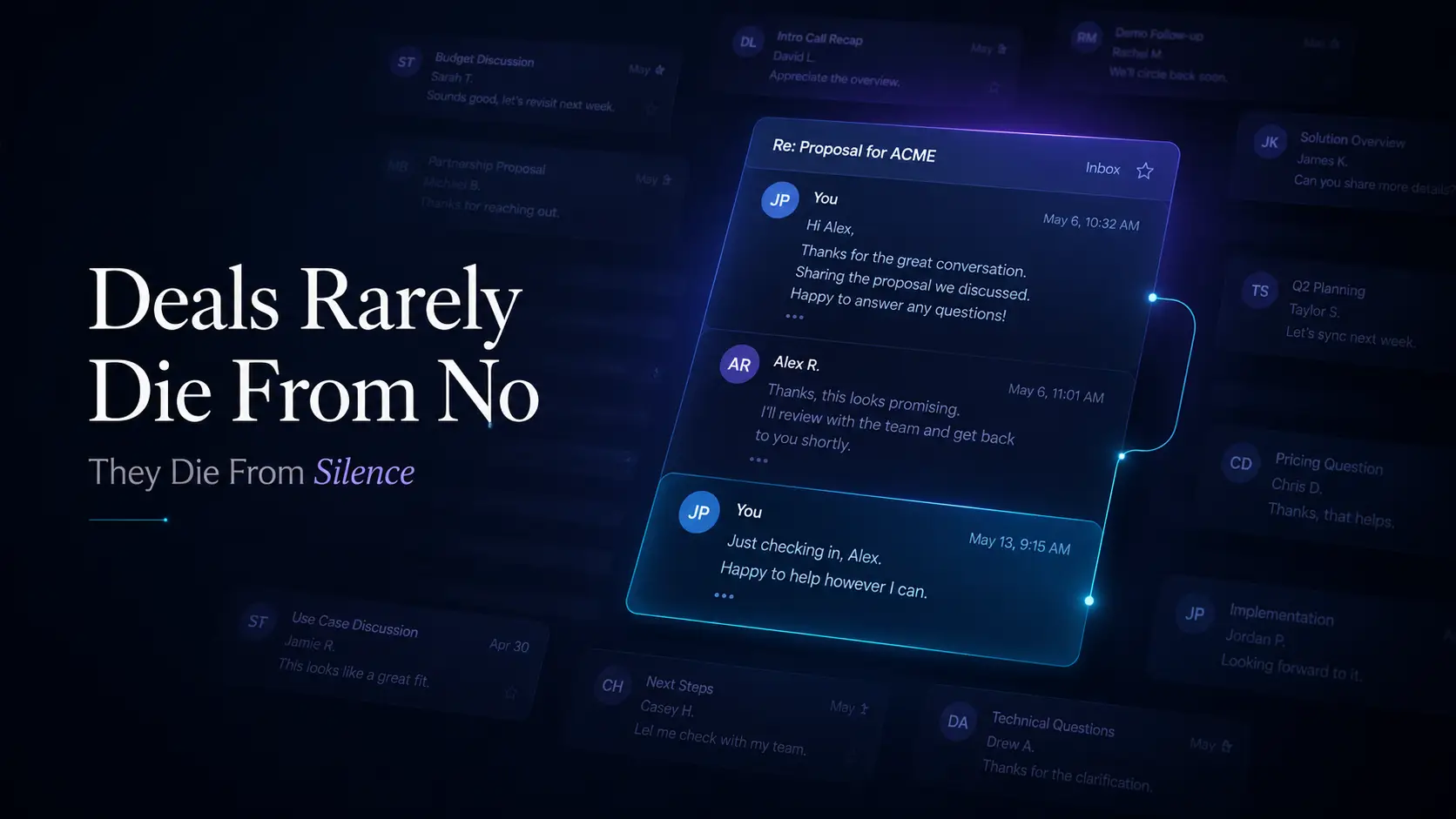
Silence feels like a no. So when a prospect stops replying, the instinct is to assume the deal is dead and move on. But most of the time, silence means busy, not uninterested. And a buyer who seemed engaged before they went quiet often comes back when the timing shifts and a well-placed message is sitting in their inbox.
The other reason sellers quit early is discomfort. Following up more than twice or three times feels like bothering someone. But when each message brings something useful, the reader does not experience it as pressure. Instead, they experience it as consistent, professional outreach. So the discomfort is mostly in the sender's head, not in the reader's inbox.
So How Many Follow-Up Emails Should You Actually Send?
The honest answer is that it depends on the deal type, the buyer relationship, and the intent signals you are seeing. So there is no single right number that applies to every situation. But the ranges below give you a solid starting point for most of what you will encounter.
For cold outreach, four to six touches is usually the right range before stepping back. That is enough to show genuine interest and give the sequence a real chance, without running the risk of becoming a name the reader dreads seeing in their inbox. If you hit six and have heard nothing across varied messages, a final breakup note is the right close.
For warm leads and inbound contacts, you have more runway. These buyers showed some interest first, so a longer sequence is justified and often expected. Five to eight touches is a reasonable range here, and enterprise deals with longer sales cycles can warrant more.
| Deal Type | Suggested Touches | Why |
|---|---|---|
| Cold outreach, unknown contact | 4 to 6 | Enough to test interest, not enough to burn trust |
| Warm inbound lead | 5 to 8 | Higher intent warrants more sustained effort |
| Existing relationship, lapsed | 3 to 5 | Shorter because trust is already built |
| High-value enterprise deal | 7 to 12 | More stakeholders, longer cycle, more nurture needed |
What to Put in Each Follow-Up
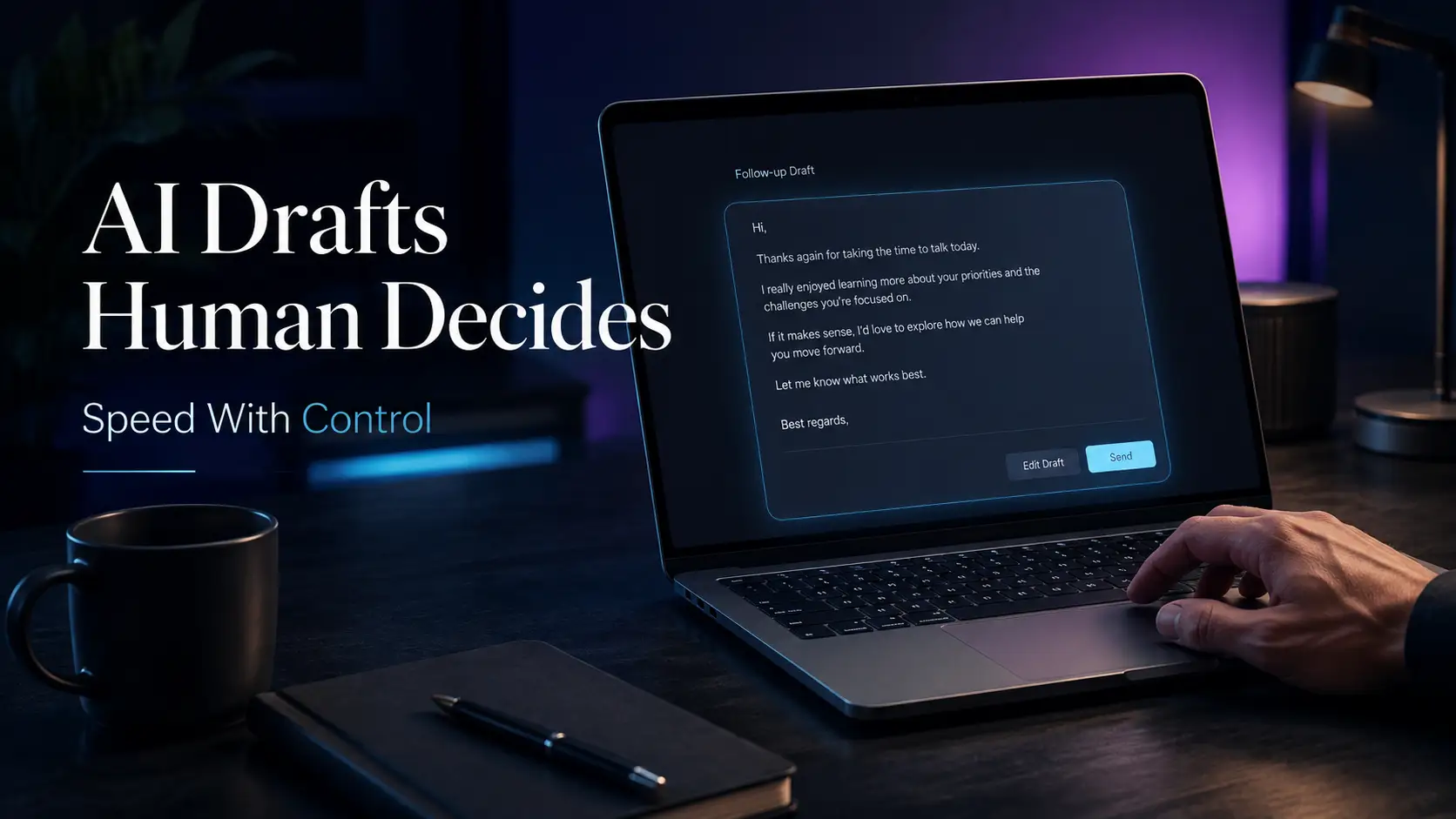
The number of follow-ups only produces results if each one earns its place. So every message in a sequence needs to bring something the last one did not. A first follow-up can be a gentle nudge referencing the original email. A second can bring a case study or a relevant resource. A third might ask a single, easy question. And a fourth could tie the message to something specific that changed on the buyer's side.
What never works is sending the same message multiple times with slightly different wording. Buyers notice this quickly, and it trains them to ignore anything from your address. So treat each send as its own small conversation, not as a repeat of the one before it.
Short messages tend to outperform long ones in follow-up sequences. So aim for three to five sentences per message, with one clear ask at the end. And that ask should be easy to answer, ideally a yes or no, so the friction of replying is as low as possible.
A tool like Continuas AI makes this practical at scale. It reads the thread, identifies the right angle for the next message, and drafts it in your voice, so you are never staring at a blank screen trying to think of a fresh angle for the fourth time. So the sequence stays varied and useful even when you are managing dozens of open threads at once.
When to Stop
There are two clear signals to stop. The first is a direct no. If a buyer explicitly says they are not interested or asks you to stop reaching out, respect it immediately. Continuing after a clear no damages your reputation and adds nothing to the pipeline.
The second signal is sustained silence after varied, valuable messages. If you have sent five or six genuinely different follow-ups across two to three weeks and heard nothing, the timing is wrong right now. So end the sequence with a clean breakup note that leaves the door open for later. Then move on with no hard feelings and no guilt about having tried.
What is not a signal to stop is silence after one or two emails. So resist the instinct to treat a quiet inbox as a closed door. Most of the time it is not. And the data is clear: most deals that do close required more touches than most sellers are comfortable sending. So give the sequence a real chance before calling it done.
Frequently Asked Questions
Conclusion
How many follow-up emails you should send depends on the deal, the buyer, and the signals you are seeing. But the data is clear that most sellers stop too early. So a sequence of five to eight varied, useful messages is where most deals have a real chance, and ending too soon means leaving winnable revenue on the table.
Keep each message fresh, make the asks easy, and stop when you get a real no or when the sequence has run its course. And if managing that across a full pipeline feels like too much to track by hand, Continuas AI keeps every sequence moving in your own voice so nothing falls through because you ran out of bandwidth.