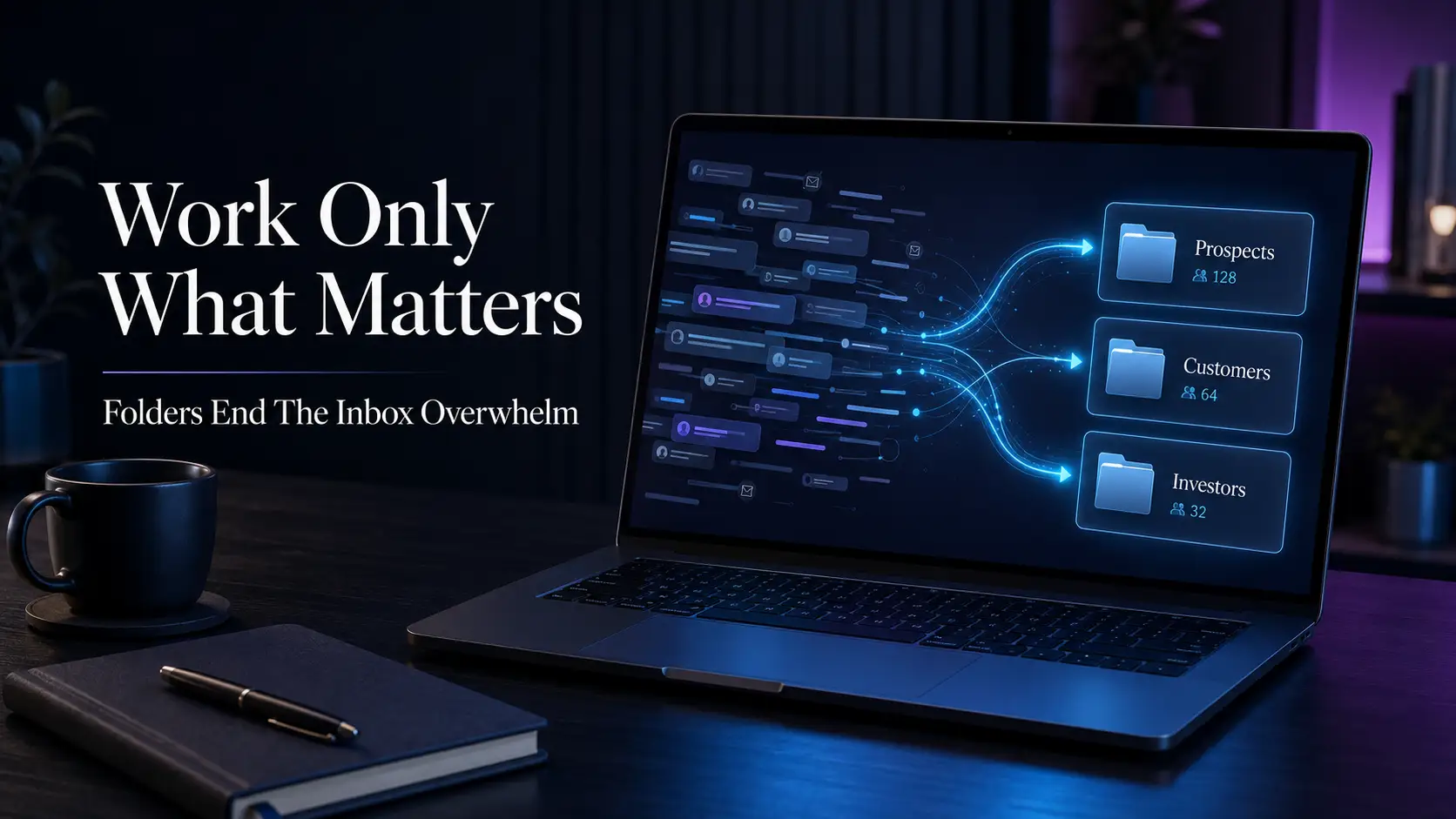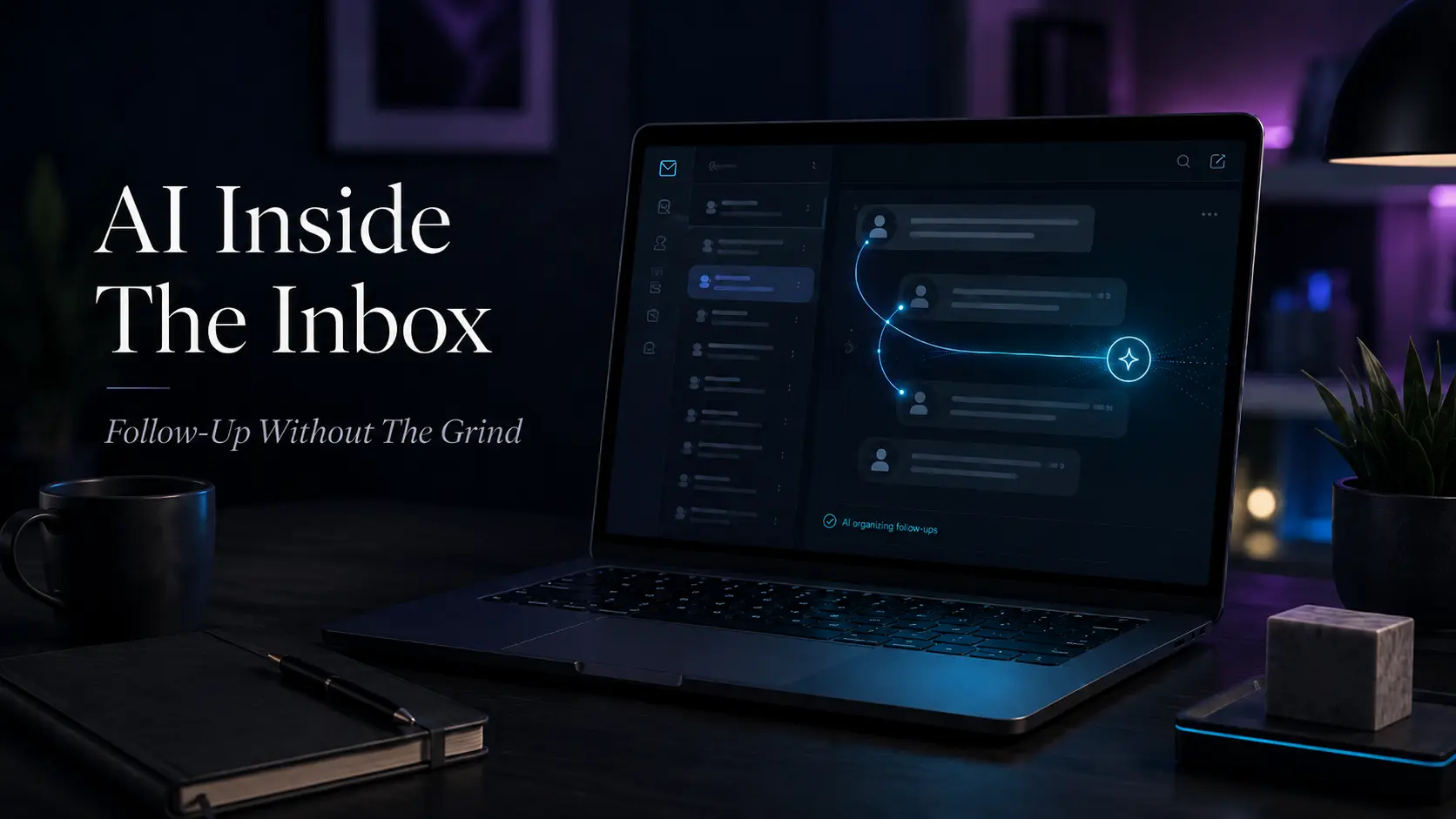
Personalized follow-up emails are the ones that actually get replies, because they sound like a real person wrote them. Most follow-ups do not. They read like a template with a name dropped in. So the buyer feels like a number, not a person. And a generic nudge is easy to ignore. So the goal here is simple. Sound like a human, and more buyers will write back.
Why Most Follow-Ups Sound Like a Robot
The problem starts with how most tools work. They hand a rep a canned template and a tone setting. So every message comes out flat, formal, and a little robotic. And buyers can spot that stiffness in a second.
Think about the last "just following up" email in any inbox. It probably felt cold. It probably got ignored. So the issue is not that follow-up does not work. Instead, it is that robotic follow-up does not work. People reply to people, not to scripts.
And the cost of sounding robotic is real. Around 80% of deals need five to twelve touches before they close. Yet many of those touches get ignored when they read like a script. So a stiff template does not just fail to help. Instead, it quietly pushes buyers away.
The Tone Dropdown Trap
Tone dropdowns promise personality, but they deliver a costume. A rep picks "friendly" or "professional," and the tool paints on a mood. So the email sounds like a setting, not a human. And it never quite matches the way that rep actually talks. That small gap is enough to make a buyer feel the machine behind the message.
Personalized Follow-Up Emails That Match Your Voice
Personalized follow-up emails work because they carry a real voice. Not a tone slider. Not a template. They use the actual phrases, jokes, and rhythm a rep already leans on. So the buyer reads it and feels a person on the other end. And that human feel is what earns a reply.
So why does voice matter this much? Because trust starts with feeling understood. And a message in a familiar voice reads like a note from someone who gets it. Meanwhile, a canned line reads like spam. So the same follow-up, in two different voices, earns two very different replies.
And this is where old-school templates fall apart. A template treats every buyer the same. But no two deals are identical. So a rigid script cannot flex the way a real voice can. Meanwhile, a voice-trained draft bends to fit each thread, yet still sounds like one consistent person.
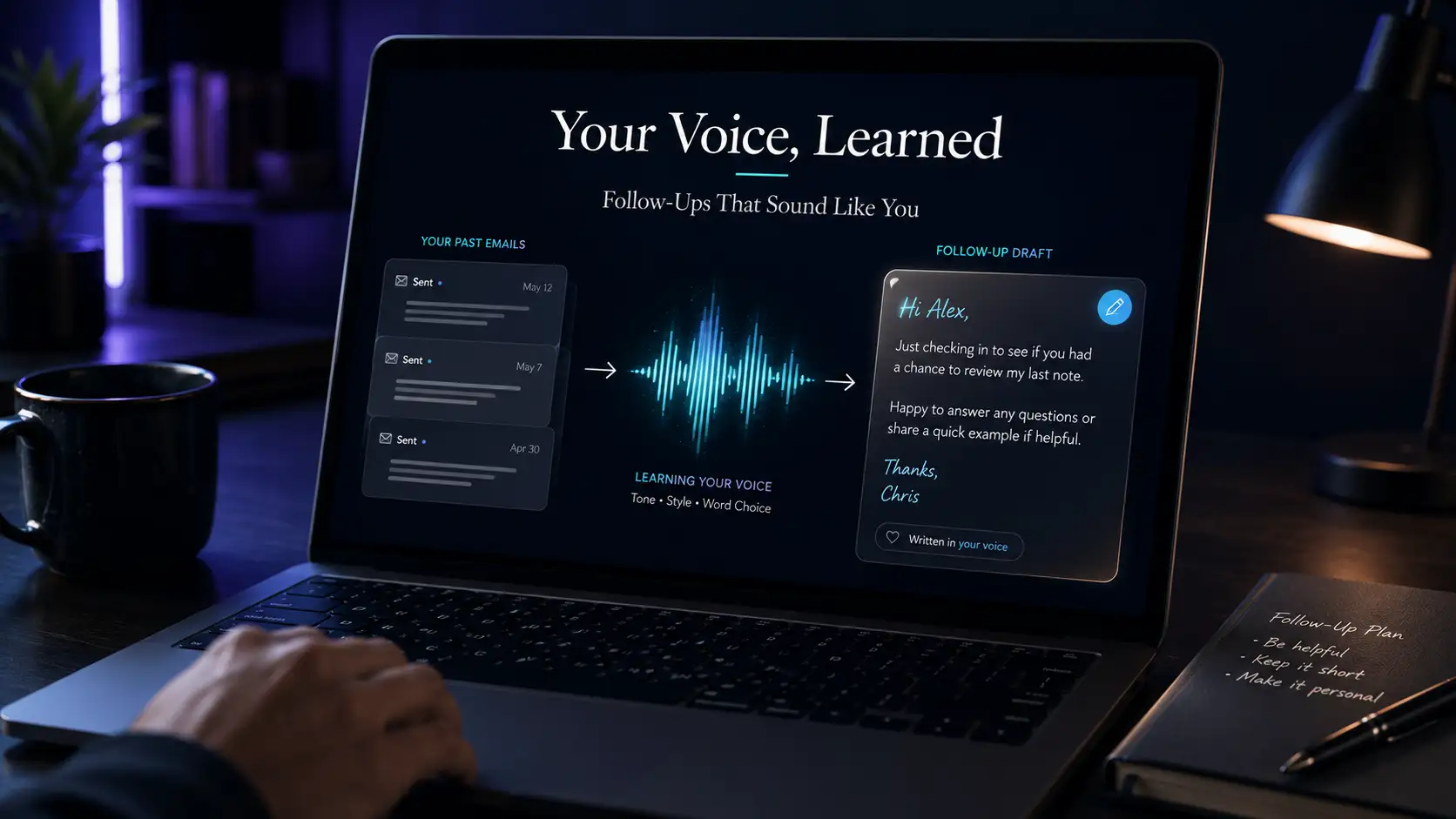
So the trick is teaching the software how a rep really writes. It studies their sent mail. So it picks up the greetings they favor, the sign-offs they lean on, and the way they get to the point. And the drafts start sounding less like a bot and more like the person.
| Follow-Up Style in 2026 | How It Lands |
|---|---|
| Canned template plus tone dropdown | Reads robotic, gets ignored |
| Voice trained on real sent mail | Sounds human, earns replies |
| Generic "just checking in" | Feels cold and forgettable |
| Your phrases and your rhythm | Feels personal and familiar |
How Personalized Follow-Up Emails Get Trained
Good personalized follow-up emails start with real examples. Firstly, the software learns from sent mail, so it hears the natural voice. Secondly, a rep can paste in a few favorite samples to sharpen it further. So the more it reads, the closer it gets. And within a short while, the drafts feel like something the rep would have typed anyway.
Your Phrases, Your Rhythm, Every Time
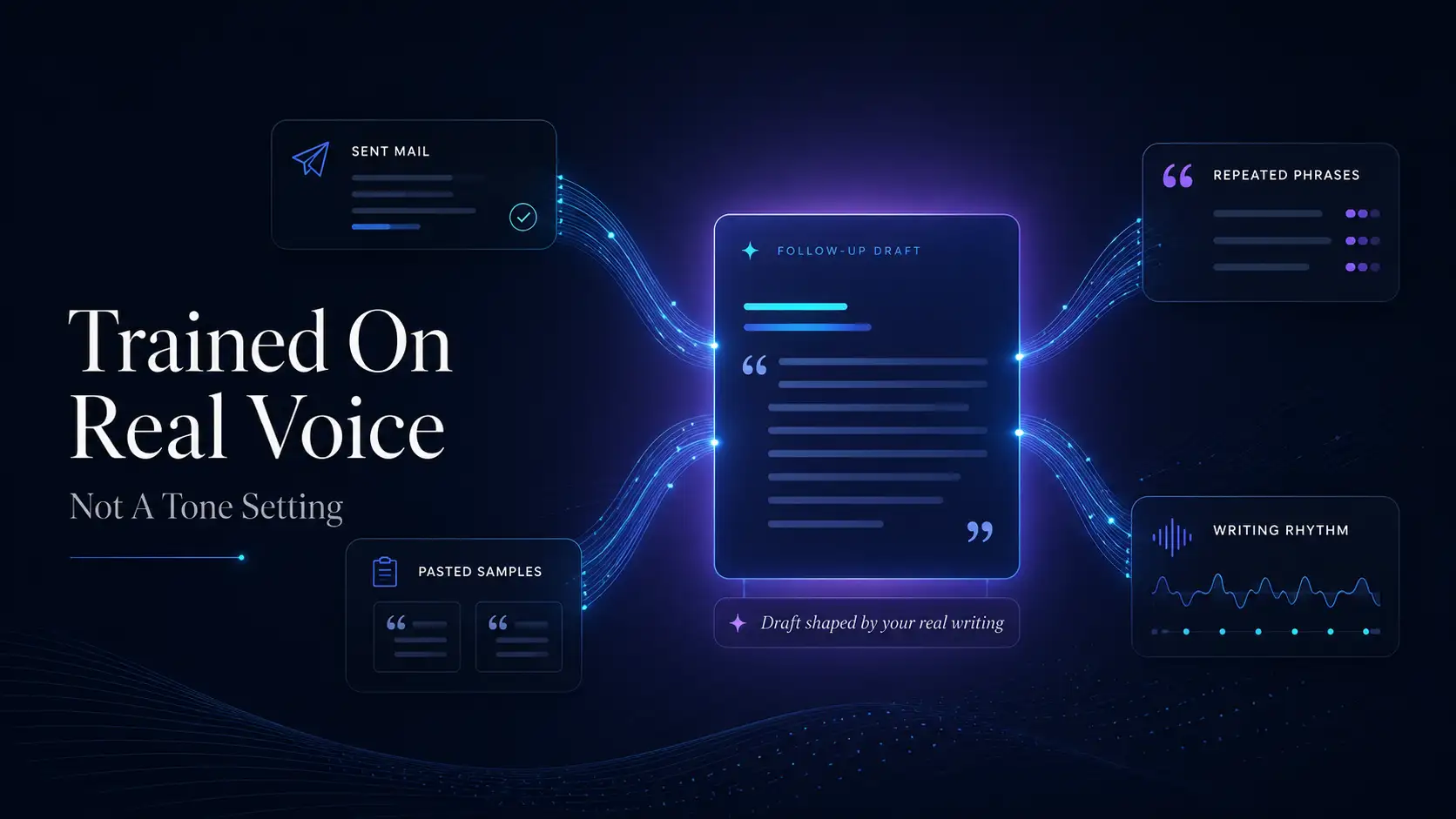
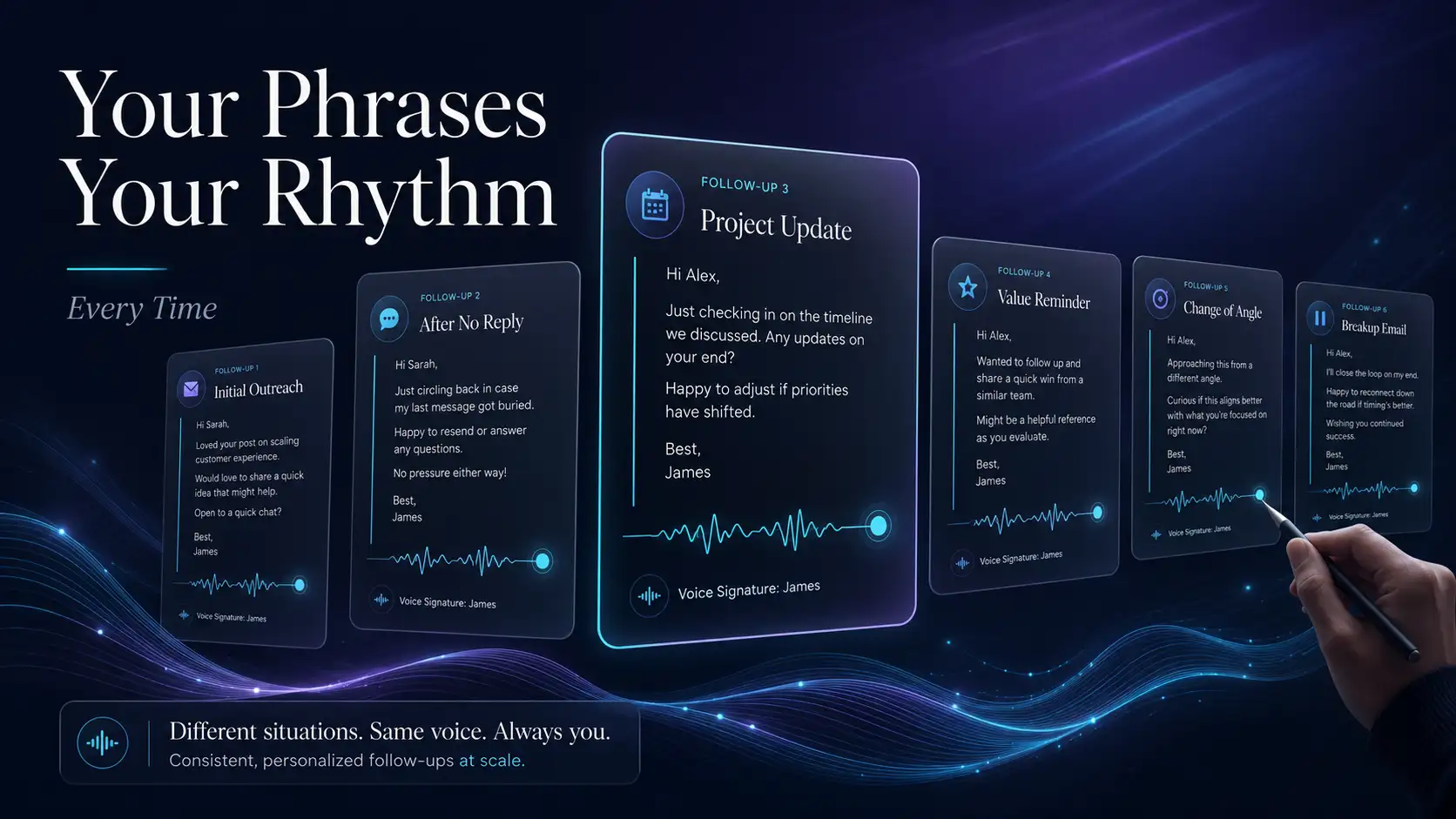
So the voice is made of small things. It is the words a person reaches for and the pace they write at. So a good draft keeps those quirks intact. It uses the phrases a rep loves and the rhythm they trust.
And consistency matters here. Every follow-up should sound like the same person, thread after thread. So the buyer builds a clear sense of who they are dealing with. And that familiarity is quiet, but it builds real trust over time.
Now think about scale for a second. A rep might send dozens of follow-ups a week. But writing each one from scratch takes time nobody has. So a draft that already sounds like them saves real hours. And it keeps every message personal, even at volume.
Still Fully Editable, Always
No draft is ever locked. So a rep reads it, tweaks a line, and hits send. Nothing goes out that does not feel right. And that final human check is the whole point. And the software does the heavy lifting, while the rep keeps the last word, every single time. So there is no risk of a strange line slipping out. And that safety net makes the whole thing easy to trust.
Frequently Asked Questions
Sound Like Yourself With Continuas
At Continuas, we believe a follow-up should sound like you wrote it, because you basically did. So personalized follow-up emails are not a gimmick to us. They are the entire point.
We learn your voice from your sent mail and the samples you paste in, then draft every follow-up the way you would have. So there are no tone dropdowns and no robotic scripts.
Our voice-trained drafts keep your phrases, your rhythm, and your last word, since every message stays fully editable. Send follow-ups that sound human, and watch more of them get answered.