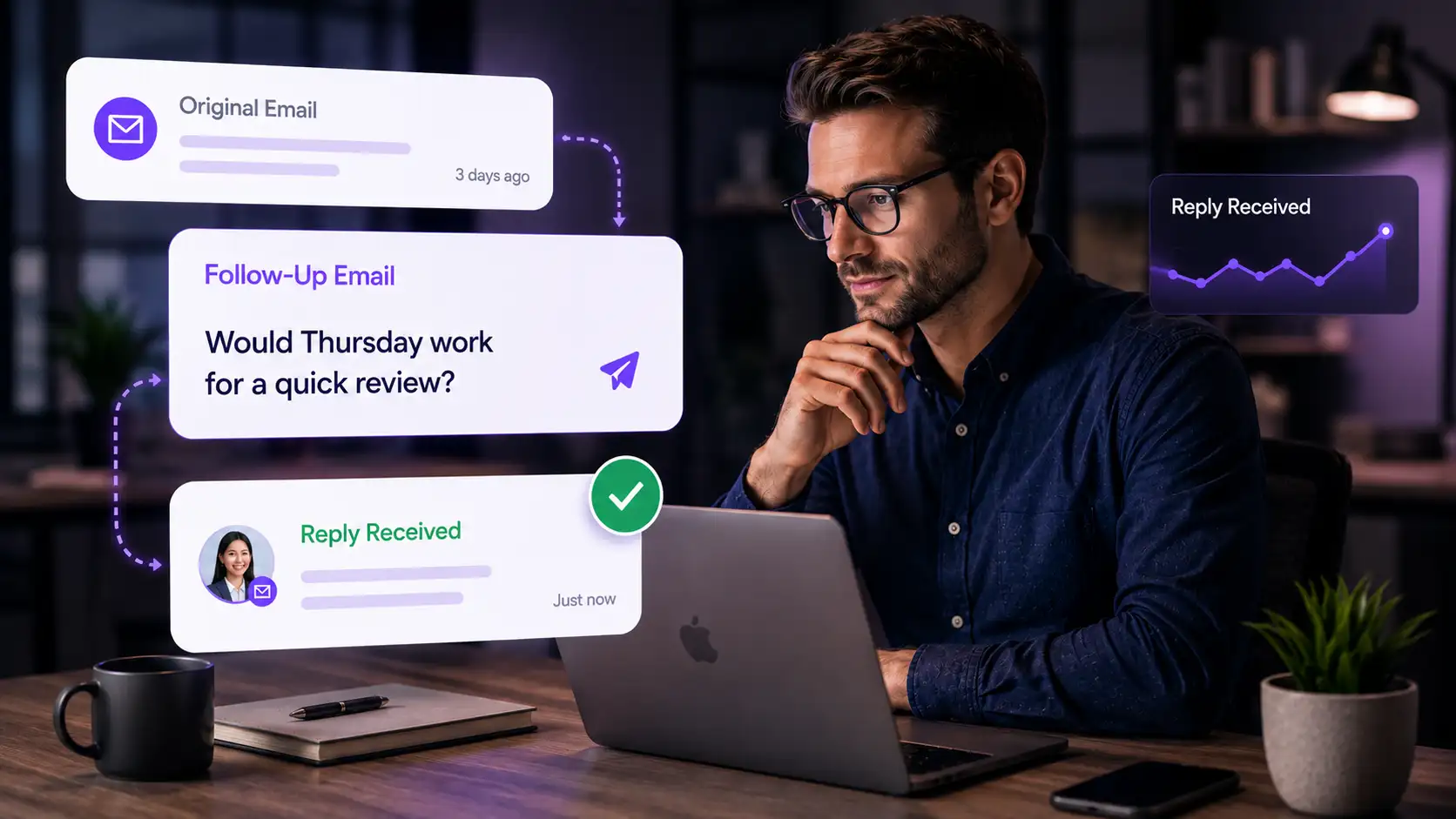
Learning how to write a follow up email is the quiet skill that turns a stalled thread into a booked deal. Most of us send one message, hear nothing, and assume the answer is no. But silence rarely means no. It usually means later, and later gets buried. So a few smart follow up email tips can lift your reply rate more than any clever opening line ever will. We wrote this guide to keep things simple, honest, and easy to use today.
This is the big-picture playbook. Below, we point you to deeper guides for each piece, from templates to timing to how many messages are too many. Think of this page as the map. So skim the parts you need, then follow the links down for the full detail. We built it for real sellers with real inboxes, not for people with endless free time.
We also wrote it because most advice online overcomplicates a simple job. You do not need fancy words. You need a clear reason to write, a single ask, and the discipline to send it on time. So let us keep the theory light and the examples practical, since that is what actually moves a reply into your inbox.
One promise before we dig in. By the end of this page, how to write a follow up email will feel less like guesswork and more like a repeatable habit. We will show you the parts, the timing, and the traps, then hand you templates so you never start from zero. So read it once, bookmark it, and come back whenever a thread goes quiet on you.
Why Most Follow-Up Emails Get Ignored
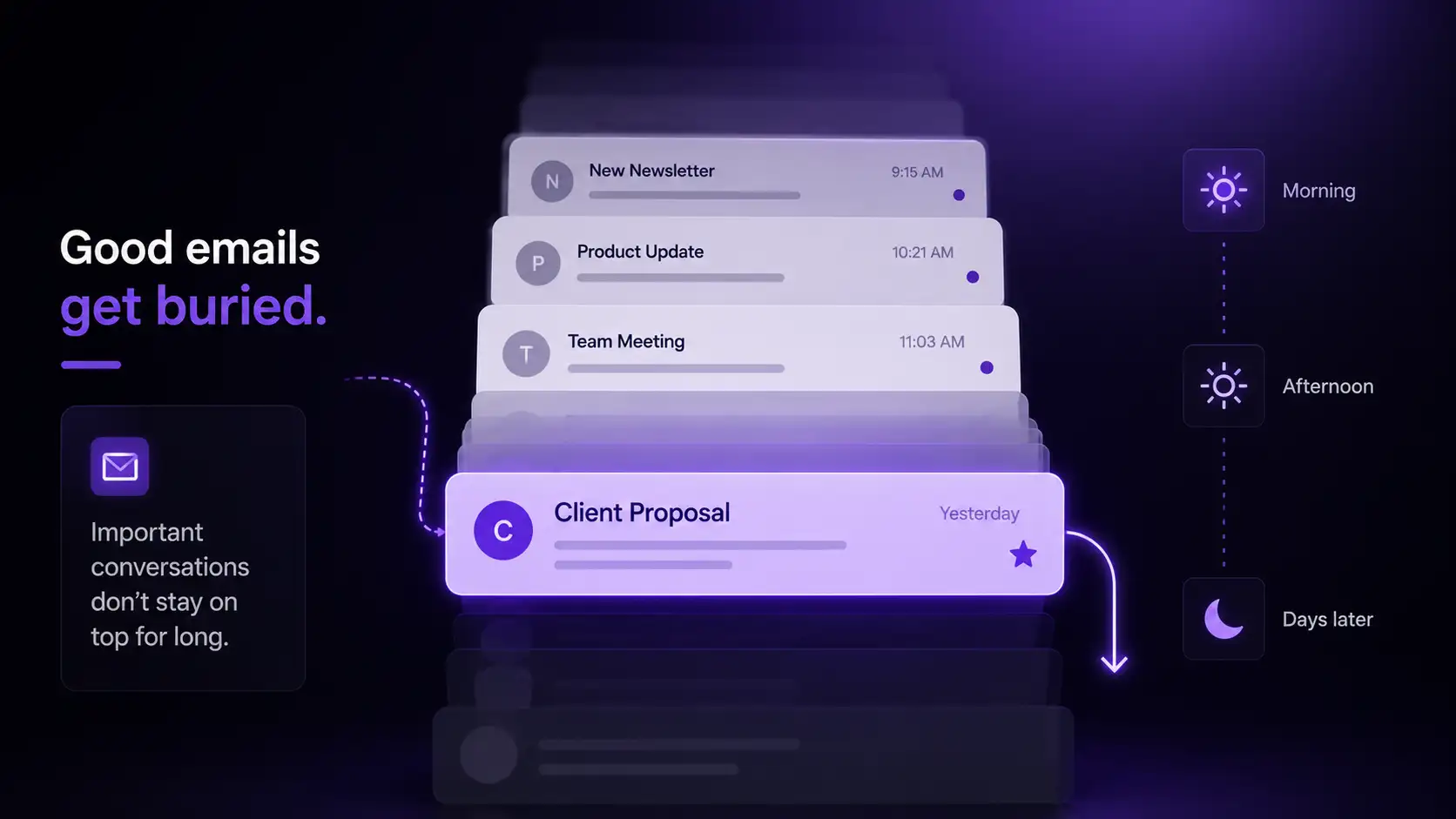
Here is the uncomfortable truth. Your email was probably fine. The pitch landed, the tone was right, and the offer made sense. However, it still went cold, and that stings more than a clear rejection ever would.
Most follow-ups fail for boring reasons. The reader got busy. Your note slid down the inbox. A newer fire pulled their attention away. So the deal did not die on purpose. It simply faded, one unread morning at a time.
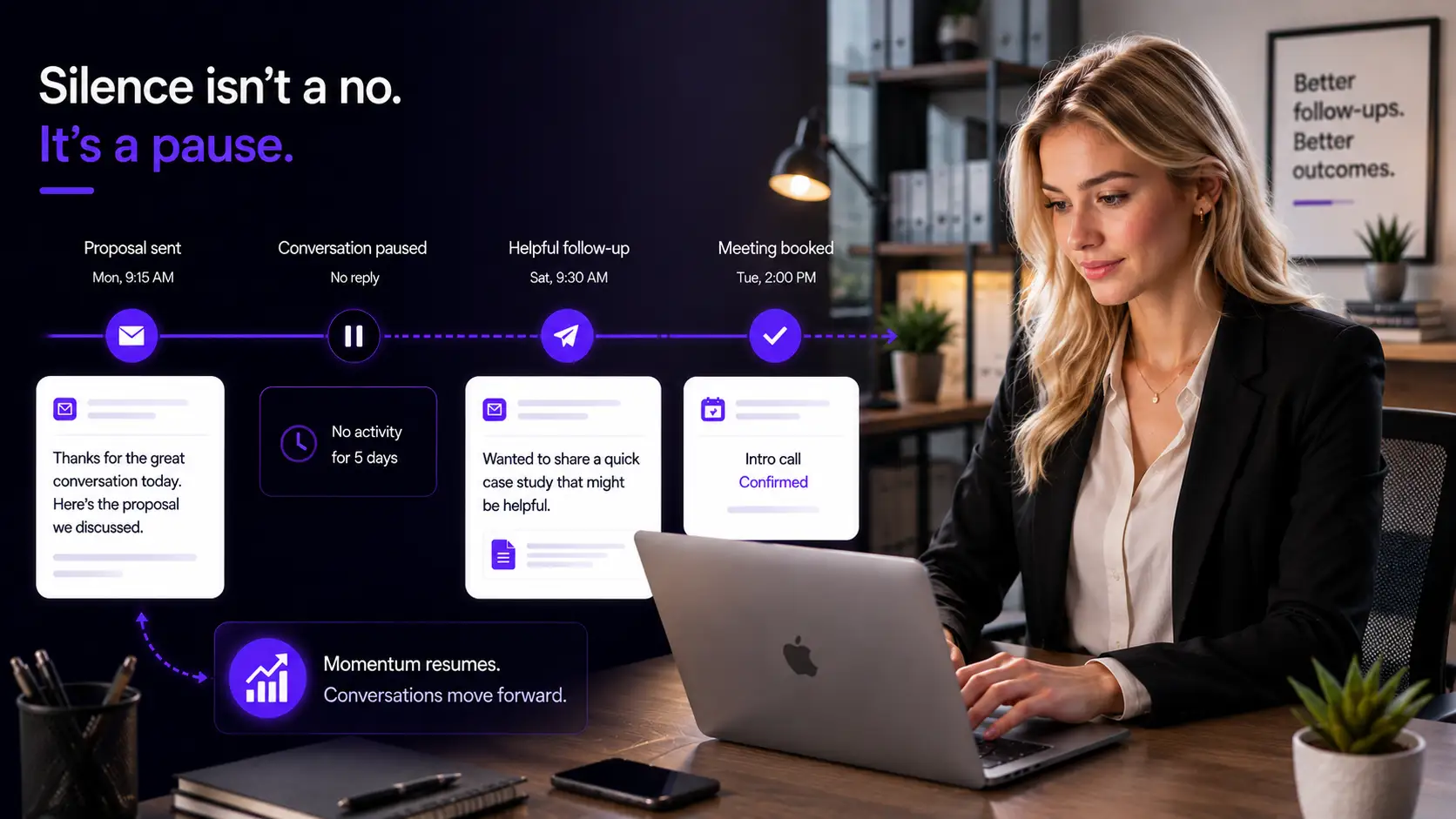
We see this pattern everywhere in B2B sales. Strong first meeting, warm reply, then a slow drift into nothing. Certainly the product was not the problem. The follow-up was, because nobody built a system to keep the thread alive. And a warm lead cools fast once the momentum stops.
Good sales communication skills start with one honest belief. People are not ignoring you. They are drowning, and your job is to make replying feel effortless. So we write shorter. We ask for one thing. And we make the next step obvious.
Think about your own inbox for a second. How many good messages sit there right now, half-read, waiting for a reply you keep meaning to send? Your buyers are exactly the same. So we stop taking silence personally, and we start making our notes easy to answer in ten seconds flat.
There is a second reason follow-ups flop. Many of us never learned how to write a follow up email in a way that feels natural, so we default to stiff, robotic lines. Words like "per my last email" or "kindly revert" put walls up fast. However, a warm, plain-spoken note reads like a real person, and real people get real answers. So we write the way we would talk across a coffee table, not the way a form letter sounds.
How to Write a Follow Up Email When the Silence Isn't Personal
The silence feels personal, but it almost never is. Knowing how to write a follow up email in that quiet moment keeps your momentum from leaking away. So we treat every gap as a memory problem, not a rejection.
Think about deal momentum like a rolling ball. Each touch keeps it moving. Miss a few, and it stops, then it needs real force to start again. Therefore steady, gentle follow-up beats one big push weeks later.
Lead nurturing works the same way. We stay useful, not pushy. We remind the buyer why they leaned in, and we do it in their own rhythm. Above all, we keep the door open without banging on it.
So the mindset shift matters most. A quiet thread is not a closed door. It is a paused conversation, and we are simply the person kind enough to press play again. That small reframe removes the fear, and fearless follow-up almost always reads warmer.
The 5 Building Blocks: How to Write a Follow Up Email People Answer
Every reply-worthy note shares the same bones. Once you know how to write a follow up email using these five parts, the words come faster and the replies come easier. So let us walk through them one at a time.
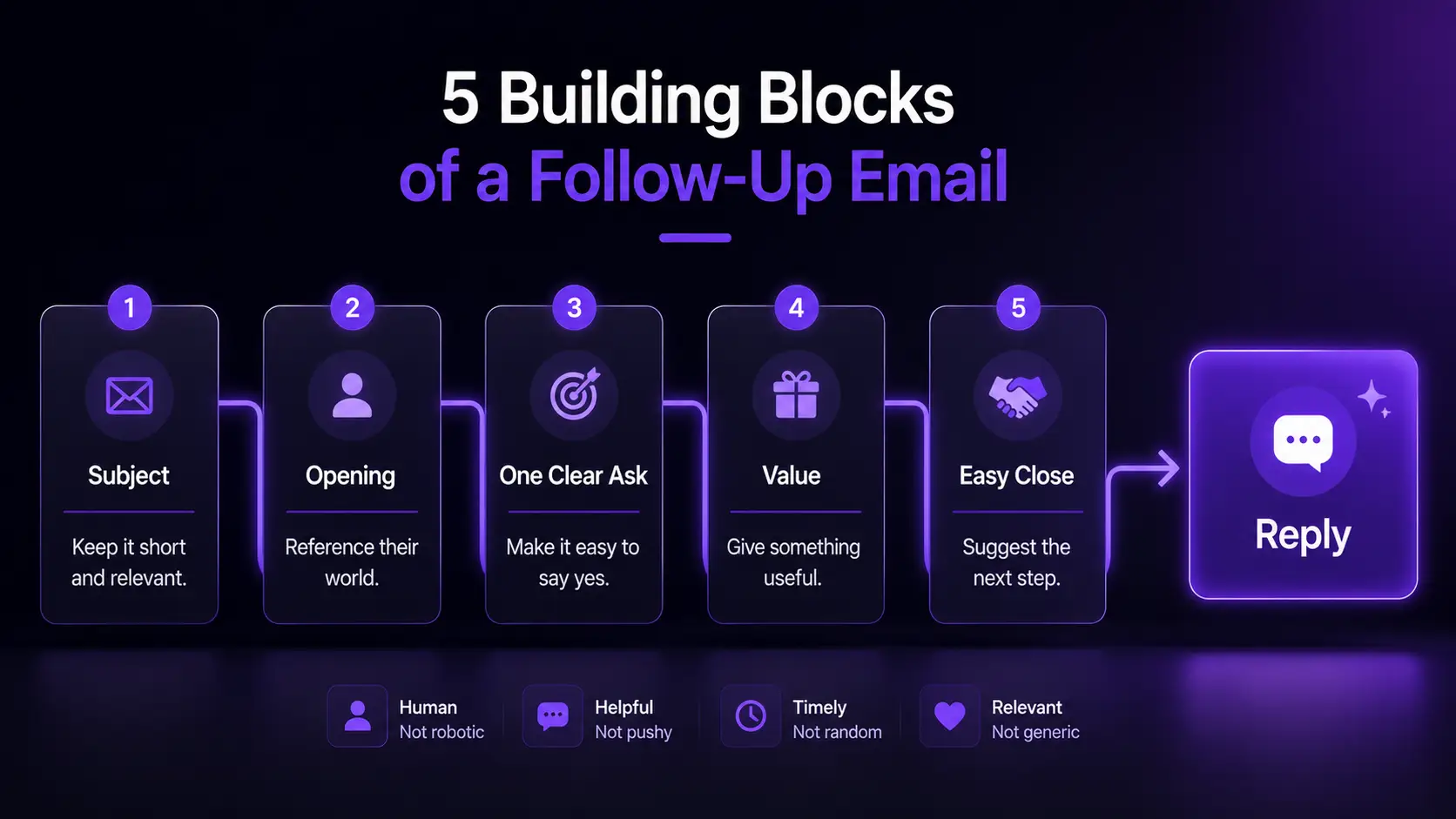
The subject line. This decides whether your email gets opened at all. Keep it short, clear, and tied to the last thread. We often reuse the original subject with a light nudge, since a fresh subject can feel like a cold pitch. A strong subject line deserves its own deep dive, so grab our full breakdown in the subject-line guide below. Meanwhile, avoid clickbait, because a broken promise in line one kills trust in line two.
The opening. Skip the long wind-up. We name the reason we are back in one line, and we make it about them. So instead of "just checking in," we write "you mentioned budget approval this week, so I wanted to send the numbers." That single change turns a lazy nudge into a reason to reply. Likewise, dropping their own words back into the note shows we listened.
The ask. One clear request per email. Do you want a reply, a call, or a yes? Pick one. However, buyers freeze when a message hides three asks inside a paragraph, so we keep it single and simple. To clarify, a small ask gets a fast yes, and a fast yes keeps the deal warm.
The value-add. Give before you take. A quick case study, a useful stat, or a short answer to their earlier question all earn goodwill. Likewise, a relevant link shows you listened. This is where a good sales follow up message stops feeling like nagging and starts feeling like help. So every touch should leave the reader a little better off, even if they never buy.
The sign-off. Close warm and low-pressure. We name the next step and make saying yes take two seconds. So "want me to send a calendar link?" beats "let me know your thoughts" every time. In addition, a friendly close protects the relationship, and relationships close deals long after a single email fades.
Nail these five, and the rest of writing a follow up email gets much easier. Meanwhile, the templates below turn these blocks into copy you can send in minutes. So do not memorize scripts. Learn the bones, and the words will follow naturally.
Here is a quick gut check we use before every send. Would we enjoy getting this note? Is the ask clear in one read? Does it respect the reader's time? If all three are yes, we hit send. If not, we trim until they are. That habit alone lifts replies more than any template swap.
Notice that none of these blocks ask you to be a genius writer. Knowing how to write a follow up email is really about structure and restraint, not talent. So even a plain, average message that follows the five parts will beat a clever one that rambles. First we get the bones right. Then, over time, our own voice fills in the rest, and the notes start to sound effortlessly like us.
Ready-to-Use Templates (Free Swipe File)
Blank pages slow everyone down. So we built a free swipe file of proven layouts you can adapt in under a minute. Each one already follows the five building blocks, and each shows a clean follow up email format you can reuse across deals.
The pack covers first follow-ups, second nudges, breakup emails, and re-engagement notes for old threads. In addition, every template leaves room for one honest, human line, because copy-paste alone never wins. A little personality is what separates a real message from spam.
Templates save time, yet they only work when you edit them. So we treat each one as a frame, then fill it with a detail only that the buyer would recognize. That mix of speed and personalization is where deals actually turn. Ready to save some time? Get the free follow-up email templates and start sending stronger messages today.
A word of caution though. Templates can make us lazy if we let them. The goal is not to skip learning how to write a follow up email. The goal is to skip the blank page, then add the human touch that no template can fake. So use the swipe file as training wheels, study why each line works, and soon you will draft strong notes without any frame at all.
Following Up When You Hear Nothing Back
No reply is the hardest case, and it happens the most. First, do not panic or apologize. A missed reply is normal, not a crisis, so we stay calm and helpful.
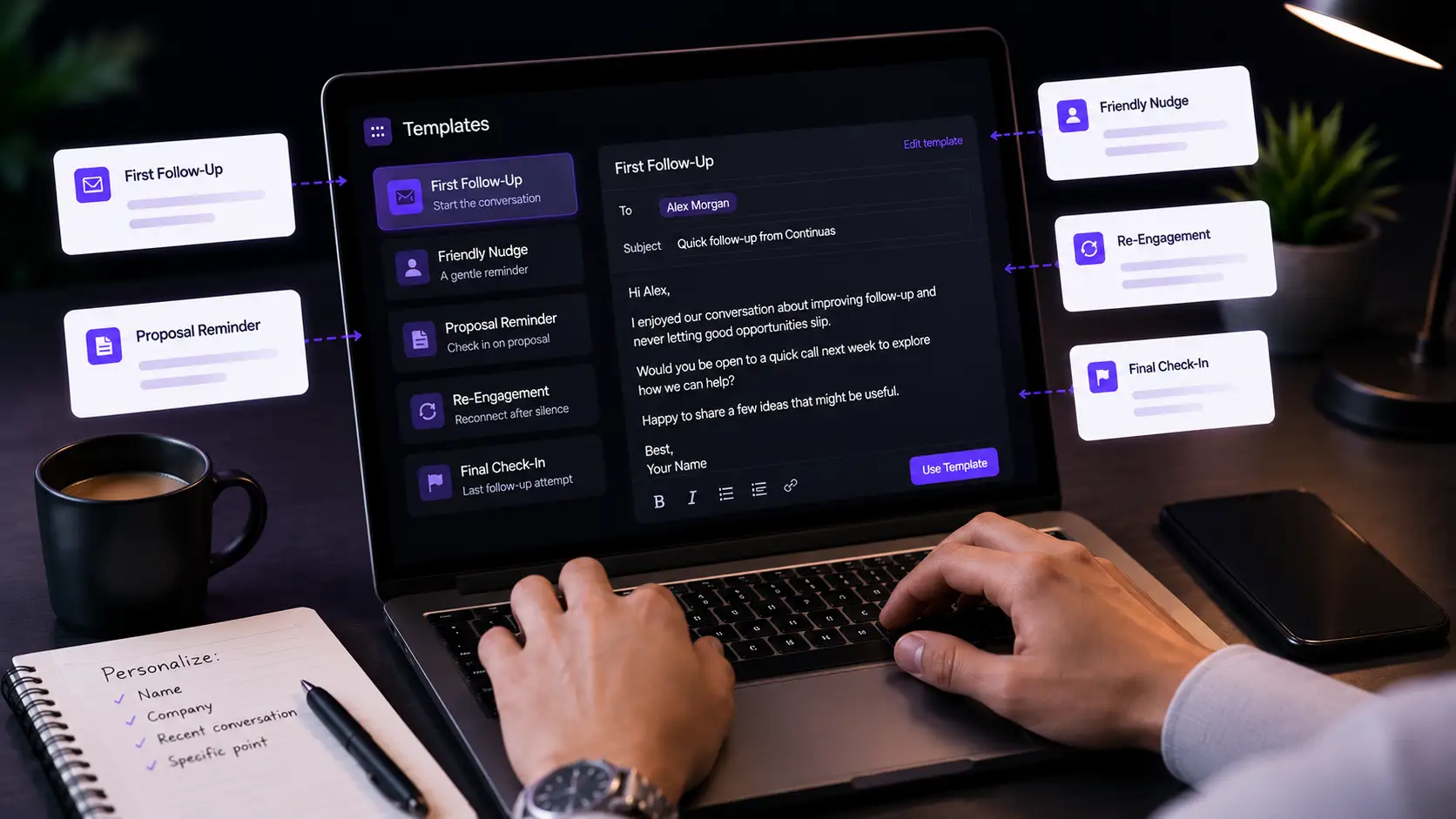
Sometimes you need the full playbook for total silence, with a step-by-step sequence across days and weeks. Other times you just want one quick, tactical line to send right now. We cover both, so pick the depth you need and jump to the matching guide.
The key is variety. Sending the same "checking in" note four times teaches the reader to ignore you. But changing the angle each time, with a new value-add or a new question, keeps the thread fresh and gives them a real reason to answer.
People often ask us how do you write a follow up email that does not sound desperate after three tries. The answer is simple. Each note should stand on its own, offer something new, and never guilt the reader for being busy. So we lead with help, not with hurt feelings.
One more thing on total silence. Give the reader an easy out. A line like "if now is not the right time, just say the word and I will circle back next quarter" often unlocks a reply, because it removes the pressure. Strangely, offering to stop is one of the fastest ways to get a yes.
We also space our touches when nothing comes back. A daily barrage feels frantic. But a note today, another in four days, then one a week later reads as calm and confident. So the rhythm itself sends a message, and that message is "I am here when you are ready." That patient pace is a big part of how to write a follow up email sequence that wins slow deals without wearing anyone down.
Context helps here too. Before we resend, we reread the whole thread from the top. That quick scan reminds us what the buyer cared about, what we promised, and where the ball got dropped. So our next note picks up the exact thread they remember, not a generic reset. Small effort, big difference, and it keeps every message feeling personal rather than automated.
How Persistent Should You Be?
Persistence is a balance beam. Too little, and the deal fades. Too much, and you become the person people mute. So how far is too far?
The honest answer depends on the deal size, the buyer, and the last signal you saw. A hot lead who asked for pricing deserves faster, firmer follow-up. Meanwhile a cold contact from a trade show needs a lighter, slower touch. So we match our pace to their heat, not to our own quota panic.
We built a whole guide on the exact question of how many follow-ups to send before a deal is truly dead. It walks through the signals that say keep going and the ones that say let go. So read that piece when you want a clear stopping rule.
Here is our own rough rule of thumb. We keep going as long as we can add value and the door has not been firmly shut. Certainly we stop when a buyer says no clearly, or when three fresh, useful notes get total silence. Until then, polite persistence is not annoying. It is professional.
Persistence also tests how well we know how to write a follow up email that stays interesting. The fifth touch cannot look like the first. So we rotate our angles, a helpful article one week, a customer story the next, a simple question after that. Each note earns its place. As a result, the reader never feels chased, only helped, and helped people tend to answer.
Getting the Timing Right
When should you actually hit send? Timing shapes your reply rate as much as your words do. So we never pick a random Tuesday and hope for the best.
The best timing comes from the thread itself, not a fixed calendar. Did they open your last note twice? Did they promise an update by Friday? Those signals point to the right moment far better than a generic "wait three days" rule.
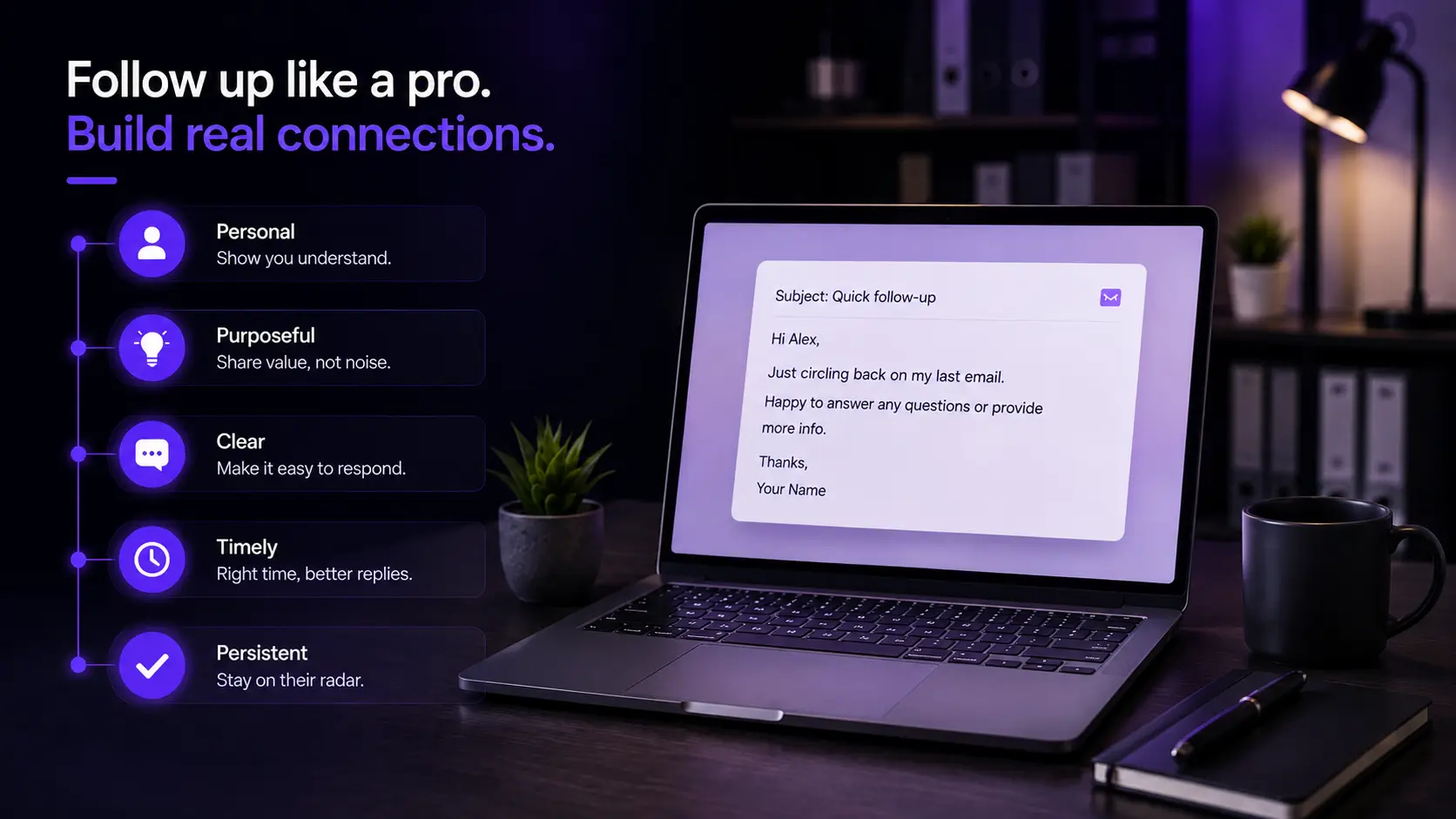
We break down the science of send timing, including days, hours, and buying signals, in a dedicated guide. So when you want to fine-tune your email outreach strategy down to the hour, that piece has you covered.
A few patterns hold up year after year. Mid-morning tends to beat late afternoon. Midweek tends to beat Monday chaos and Friday drift. However, your own data always wins over any rule of thumb, so we watch when our buyers actually open and reply, then we send into those windows on purpose.
Timing and wording work together, not apart. The best-written note lands flat at the wrong hour, and a plain note shines at the right one. So learning how to write a follow up email means learning when to release it too. We pair a clear message with a smart send time, and that combination quietly doubles our odds. In short, right words plus right moment equals more replies.
Common Follow-Up Email Mistakes to Avoid
A few small habits quietly kill replies. We have made every one of these, so learn from our bruises instead of your own.
First, the guilt trip. Lines like "I guess you are not interested" push people away. Second, the wall of text. Long paragraphs get skimmed, then skipped. Third, the vague ask, where the reader cannot tell what you want. In short, confusion never converts.
Fourth, bad email follow up etiquette, like sending five notes in three days or copying the whole company on a private thread. Fifth, forgetting the person entirely, which is where most b2b email writing goes flat. So we always tie the message back to something real they said.
Sixth, the copy-paste giveaway. A template with the wrong name or a stray bracket screams laziness, and it undoes every good instinct in one glance. So we proofread the small stuff, since the small stuff is what buyers notice.
Get these right, and your professional communication feels calm and confident. As a result, buyers trust you more, and trust is what moves deals. So we treat every follow-up as a tiny deposit in the relationship bank.
There is one mistake we save for last, because it hurts the most. Giving up too soon. The data is clear that most sellers quit right before the reply would have come. So we do not confuse silence with a final no. We keep our system steady, our notes helpful, and our patience longer than the competition's. That single edge wins more deals than any polished line ever could.
2026 Follow-Up Email Data at a Glance
Numbers help us make better calls. Here is where things stand this year, based on 2026 sales benchmarks.
| Metric (2026) | What the Data Shows | Why It Matters |
|---|---|---|
| Touches needed to close | 80% of deals need 5 to 12 follow-ups | One or two messages is rarely enough |
| Reps who quit early | 92% stop after only 4 attempts | Most give up right before the reply |
| Best reply windows | Tuesday to Thursday mornings still lead | Timing lifts your response rate optimization |
| Revenue lost to weak follow-up | $1.5M lost per $10M in revenue | Silence is expensive, not neutral |
| Reply lift from personalization | Personalized notes see up to 32% higher replies | Human beats template every time |
The takeaway is simple. Persistence pays, but blind persistence annoys. So we follow up more, yet smarter, and we let real signals guide each send. Read the table once, then act on it all quarter. These small numbers add up to big wins over time.
When to Stop Writing These by Hand
At some point, doing all of this manually stops scaling. You know how to write a follow up email well. But tracking dozens of threads, remembering every promise, and timing each send by hand eats your whole week. So the smart move is to let a system carry the load.
This is where a follow-up operating system changes the game. Instead of living inside reminders and sticky notes, you get one place that watches every thread and surfaces the next move before you forget it. We dig into that full approach in our operating-system guide.

Tools like Continuas fit here quietly. They read your threads, learn your voice, and draft the next follow-up so it sounds like you, timed from the conversation itself. You still review and send, so nothing leaves your hands without a look. Curious how that feels day to day? You can request access and see your own dropped threads come back to life.
No pressure though. Most readers here are still learning the craft, and the craft comes first. Master the words, learn how to write a follow up email that feels human, then let the system handle the busywork. The habit stays yours. The heavy lifting does not have to be.
Frequently Asked Questions
Conclusion
Knowing how to write a follow up email is not about being clever. It is about being clear, kind, and consistent when everyone else goes quiet. So we keep our notes short, our ask simple, and our timing tied to the thread.
Start with the five building blocks. Grab the free templates. Follow the deeper guides on silence, persistence, and timing whenever you need them. That mix is the core of solid follow up email best practices, and it is exactly how to write an effective follow up email that people want to answer.
If you take one thing from this page, take this. A professional follow up email is simply a helpful nudge sent at the right moment. Get that habit right, and your pipeline stops leaking.
So practice the craft this week, then lean on a smart system once the volume grows. Want a real example to model? Our template pack gives you a ready follow up email example for every stage, so you never stare at a blank screen again.
The good news is that this skill compounds. Every note you send teaches you a little more about how to write a follow up email your buyers actually welcome. So start small, stay consistent, and watch the replies climb. We have seen quiet threads turn into signed deals again and again, and yours can too. Now go send the one you have been putting off.